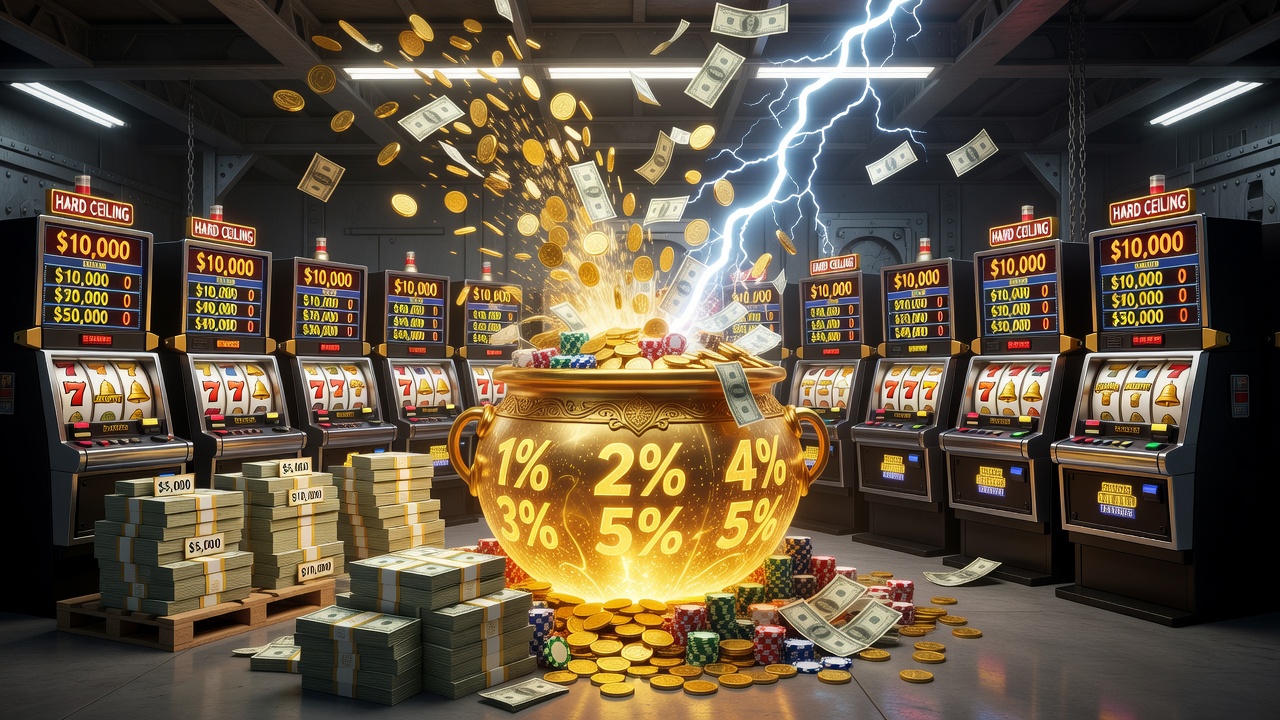
A single spinning reel can hold a prize pool worth more than most people earn in a decade, yet the mathematics behind it are almost embarrassingly simple once you strip away the marketing gloss. Casinos don't hide how jackpots grow - they publish the mechanics openly, because the house edge remains intact regardless of how large the number on the screen gets. What changes is player behavior: bigger numbers pull in more attention, more bets, and more misplaced confidence about odds that haven't actually improved.
This guide breaks down the actual architecture of a money pot - the pooled funds that accumulate from player contributions and eventually pay out to one or several winners. Understanding how that pool fills, caps, and resets is the difference between chasing a number for entertainment and making calculated decisions about when a jackpot offers genuine value. Anyone curious about how these systems reward patience over impulse should look at how a money pot max win is structured before committing a single credit, because the payout ceiling often tells you more about your realistic odds than the advertised total ever will. From there, the goal is to connect the theory to something usable: a framework for reading prize pools correctly and building a big win strategy that doesn't rely on luck alone.
A money pot is a collective prize fund built from a percentage of every wager placed on a particular game or network of games. Instead of paying out a fixed amount, the operator routes a small slice of each bet - often between 1% and 5% - into a growing balance. That balance is the pot, and it climbs continuously until triggered by a qualifying event: a specific symbol combination, a random algorithmic trigger, or a manual draw.
Fixed pots pay a predetermined amount regardless of how long the game has run since the last payout. Progressive pots, by contrast, grow without a ceiling until someone hits the trigger condition, at which point they reset to a seed value and start climbing again. The distinction matters because progressive systems carry higher variance - longer dry spells, but larger eventual rewards.
Pooled prizes keep players engaged longer than flat payout structures. A rising number creates a visible, trackable incentive that a static payout table simply can't replicate. Operators also benefit because the pot effectively defers payout risk - the money sits accumulating interest and player interest simultaneously until it's claimed.
A local jackpot draws contributions from a single machine or table. A network jackpot pools funds across every device within one venue or platform. A wide-area jackpot links contributions across multiple properties, sometimes across an entire region, which is why these tend to reach the most dramatic totals. Each tier trades frequency for size - local jackpots hit more often but pay less; wide-area jackpots hit rarely but can pay life-changing amounts.
Some gambling jackpot systems use a hidden random number generator that fires independently of the visible gameplay - you could be mid-spin with no obvious jackpot symbols and still trigger the win. Others require a literal combination on the reels or cards. Random-trigger systems are harder to predict but statistically fairer across the player base, since no amount of symbol-tracking gives an edge.
Licensed operators are required to have their random number generators and payout percentages independently tested. This auditing doesn't guarantee a win, but it does confirm that the advertised odds match the actual mechanics running behind the interface - a distinction that separates legitimate gambling jackpot systems from unregulated ones.
The speed at which a prize pool climbs is a direct function of total wager volume multiplied by the contribution rate. A high-traffic game with a 2% contribution rate will often outgrow a low-traffic game with a 5% rate simply because volume compounds faster than percentage alone.
Not every prize pool grows indefinitely. Many carry a max win cap - a hard ceiling beyond which the operator will not pay out, regardless of how large the theoretical pool has become. This protects the operator from catastrophic liability but also means chasing an already-capped pot past its ceiling offers no additional upside.
Terms and conditions typically disclose the max win figure, the contribution rate, and whether the pool resets on a schedule or purely on trigger. Reading these details before wagering tells you whether a currently displayed total is close to its cap or still has meaningful room to grow.
Progressive pools that sit well above their historical average payout point are statistically more likely to trigger soon, simply because most systems are weighted to release once the pool crosses a certain threshold. This isn't a guarantee, but it's a more informed entry point than playing at random.
A sound big win strategy treats jackpot pursuit as a separate bankroll line from regular play. Setting aside a fixed, affordable amount specifically for jackpot attempts - and stopping once it's exhausted - prevents the emotional spiral of chasing a number that hasn't hit yet.
Because most triggers are probability-based rather than time-based, longer sessions increase exposure to potential trigger events but don't change the underlying odds per spin or hand. Strategy here means balancing exposure against your bankroll limit, not extending play indefinitely in hopes of forcing a result.
Slots dominate the progressive jackpot space because their random number generators make wide-area pooling straightforward to implement. Contribution rates are baked into the return-to-player percentage, so the presence of a growing pot subtly lowers the base game's payout to fund the jackpot.
Games like poker variants or blackjack sometimes offer optional side-bet pots. These operate independently of the main game outcome - you can lose the hand and still hit the side pot, or vice versa. The independence makes them a distinct risk category worth evaluating separately from your main betting strategy.
Unlike slot or table jackpots, lottery-style pools pay out on a fixed schedule regardless of individual wager size, dividing the pool among winning ticket holders. The math here is closer to pure probability distribution than to house-edge gaming, making the prize pool size the single most relevant variable for expected value.
Decide what a "win" actually means to you before you start - matching your buy-in, doubling it, or hitting a specific jackpot tier. Without a predefined target, most players default to playing until the money runs out rather than banking a genuine win.
A prize pool offers above-average value when its current size significantly exceeds the contribution rate needed to fund it from scratch - meaning the operator is effectively subsidizing the pot from past unclaimed contributions. This is one of the few situations where the math genuinely tilts toward the player.
The most frequent error is increasing bet size specifically because a jackpot looks large, assuming a bigger wager improves trigger odds beyond what the contribution formula actually supports. In most systems, trigger probability scales with bet size only within the specific tier you're wagering at - overspending doesn't buy proportionally better odds.
Only within the specific wager tier required to qualify for that jackpot level. Betting far above the minimum qualifying amount rarely improves your odds proportionally, since most systems calculate trigger probability based on tier eligibility rather than raw stake size.
That reset means someone triggered the payout and the pool returned to its seed value. It's a normal part of the pool cycle, not a sign of manipulation - the same contribution mechanics start rebuilding the total immediately.
It depends on your risk tolerance and how the specific game structures its trigger. Slot progressives often reach larger totals but trigger less predictably, while table side pots tend to have clearer odds disclosed upfront, making them easier to evaluate before committing funds.
It caps the maximum payout an operator will release from a single win event, regardless of how large the displayed prize pool has grown beyond that figure. Any theoretical excess above the cap simply isn't paid out, so checking this number before playing tells you the real upper limit of your potential return.
You can estimate likelihood by comparing the current pool size to historical average trigger points, but this is a probability indicator, not a certainty. Random number generators don't have memory, so past spins never guarantee an imminent trigger.
Check for a visible license from a recognized gaming authority and confirmation that the random number generator has been independently audited. Legitimate operators typically publish this information directly in their terms or help section rather than requiring you to search for it.