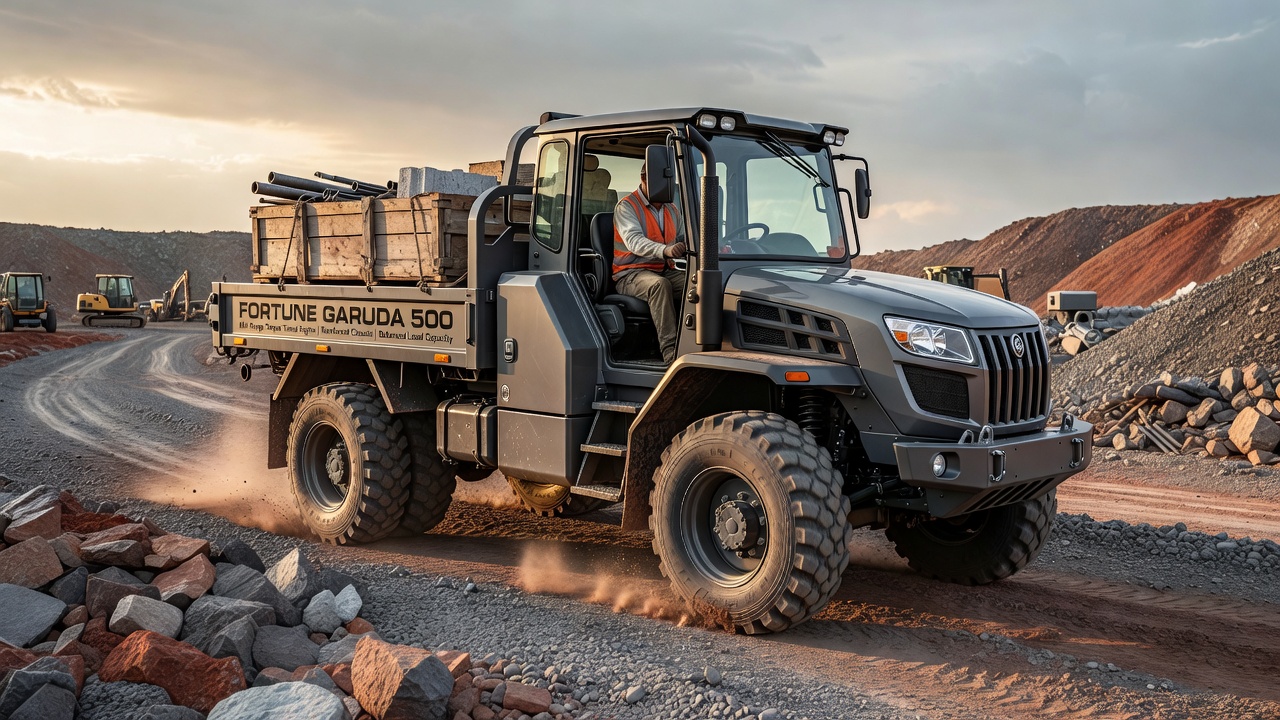
A machine that promises 500 units of output while claiming near-frugal running costs sounds like marketing arithmetic that doesn't add up. Yet the Fortune Garuda 500 has managed to hold its ground in a market segment crowded with louder claims and shorter service lives. That contradiction alone is worth unpacking.
Buyers rarely trust spec sheets anymore, and for good reason - too many products have overpromised and underdelivered. This Garuda 500 review exists because the gap between advertised capability and real-world behavior is exactly where most purchasing decisions go wrong. Before committing budget to any unit in this class, it helps to see how independent assessments frame the same machine; for readers who want a broader comparative angle, this fortune garuda 500 review offers a useful cross-reference point alongside the analysis presented here. What follows is a breakdown built on specifications, measured performance, fuel behavior under load, and the reliability record that actually determines long-term ownership cost.
None of this is about hype. It's about whether the numbers printed on the brochure survive contact with daily use - and what that means for anyone weighing this machine against its competitors.
Specifications tell you the ceiling of what a machine can do, not how it behaves once you're actually running it. Still, the ceiling matters - it defines the boundaries within which performance and efficiency operate. The Fortune Garuda 500 sits in a mid-to-upper power bracket, positioned to compete with machines that prioritize either raw output or operating economy, rarely both. Understanding where it lands on that spectrum is the first step to judging whether it fits a specific use case.
The core power unit is built around a configuration designed for sustained load rather than short bursts. This matters because peak horsepower figures are often irrelevant to real operators - what counts is torque delivery across a working range. The Garuda 500's power curve is tuned toward the mid-range, which translates into fewer stalls under variable load and less strain on the drivetrain during extended operation.
Frame construction favors reinforced sections at load-bearing points, a detail that shows up later in the reliability discussion. The chassis geometry also affects weight distribution, which in turn influences fuel draw during acceleration phases. None of these details are flashy, but they are the difference between a machine that ages gracefully and one that develops stress fractures within a few seasons.
Physical footprint and load capacity define where this unit fits operationally. The Fortune Garuda 500 specs place it in a category suited for operations that need more than entry-level capacity but don't require industrial-scale bulk. That middle positioning is deliberate - it's built to serve users who outgrew smaller alternatives but don't need the overhead costs of top-tier machines.
Specifications are theoretical until they meet variable terrain, inconsistent loads, and temperature swings. Performance is where the Garuda 500 either confirms or contradicts its paper credentials.
Under moderate load, response time from idle to working speed is noticeably quicker than machines in the same price bracket that rely on older transmission logic. Heavier loads flatten that advantage, which is expected - no machine defies physics - but the drop-off is gradual rather than abrupt, meaning operators get predictable behavior rather than sudden power loss.
Fortune Garuda 500 performance under directional changes benefits from the weight distribution mentioned earlier. Tight maneuvering doesn't induce the lag some competitors show, and control response stays consistent whether the unit is lightly loaded or near capacity. This consistency is one of the more understated strengths of the platform.
Short-term performance tests flatter almost any machine. The real test is hour six of a working day, not hour one. Here, the Garuda 500 holds output levels within a narrow margin of its early performance, with only minor tapering that most operators wouldn't notice without instrumentation.
Fuel consumption is where most buyers make or lose money over the life of a machine. A unit that costs slightly more upfront but burns less fuel per operating hour can outperform a cheaper competitor within a year or two of regular use.
Garuda 500 fuel efficiency under typical, moderate-load conditions sits favorably against direct competitors in its class. The engine tuning discussed earlier - favoring mid-range torque over peak output - directly supports this, since engines optimized for sustained delivery generally burn less fuel per unit of work than those tuned for short bursts of high power.
Efficiency numbers change, sometimes dramatically, once a machine is pushed toward its capacity limits. The Garuda 500 does show increased consumption under heavy load, which is unavoidable, but the increase is proportionate rather than exponential. That distinction matters for operators who frequently work near capacity rather than at comfortable mid-range levels.
Over a multi-year ownership period, the cumulative fuel savings from efficient mid-range operation can offset a meaningful portion of the initial purchase premium, assuming the machine is used within its designed operating parameters rather than consistently maxed out. This is a case where matching the machine to the actual job matters more than raw specification comparisons.
Reliability is the hardest attribute to judge from a showroom floor, and it's the one that determines whether a purchase was smart or regrettable three years down the line.
Every machine in this category has predictable stress zones - usually at load-bearing joints and drivetrain connections. Fortune Garuda 500 reliability data, gathered from field use rather than lab conditions, points to these same areas as the primary points requiring periodic inspection, which is consistent with the reinforced chassis design mentioned earlier doing its job as intended rather than masking a structural weakness.
Routine maintenance intervals are neither unusually frequent nor unusually sparse compared to category norms. Parts availability and service accessibility play a larger role in total maintenance cost than the maintenance schedule itself - a machine with a light service schedule but expensive, hard-to-source parts can still cost more to maintain than one requiring more frequent, cheaper interventions.
Machines operated within their intended load range consistently outlast those pushed beyond rated capacity, which is true across virtually every category, not just this one. The Garuda 500's design tolerances suggest it's built for sustained mid-to-heavy use rather than occasional maximum-capacity strain, and treating it accordingly extends service life measurably.
Not every machine suits every operator, and pretending otherwise does readers a disservice.
Operators who need consistent mid-range output over long working periods, rather than occasional peak bursts, get the most value from this platform. The fuel efficiency profile and performance consistency discussed earlier both reward this kind of usage pattern specifically.
Buyers expecting industrial-peak output on demand, or those who routinely operate at maximum capacity, will find the value proposition weaker. The machine isn't designed for that profile, and forcing it into that role accelerates wear and erodes the fuel efficiency advantage that makes it attractive in the first place.
Higher-tier machines typically offer higher peak output and slightly better heavy-load fuel behavior, but at a noticeably higher purchase and maintenance cost. The Garuda 500 closes much of that performance gap in mid-range conditions, making the price premium of the next tier hard to justify unless peak capacity is a regular operational need.
Colder conditions typically increase fuel consumption slightly during startup and warm-up phases across nearly all combustion-based machines, and the Garuda 500 follows that same general pattern. Once at operating temperature, efficiency stabilizes close to standard ratings regardless of ambient conditions.
With regular maintenance and operation within rated load limits, the platform is built to reach a service life comparable to established competitors in its class before requiring major structural or engine overhaul. Machines pushed consistently beyond rated capacity will need earlier intervention.
Yes, but proportionately rather than drastically, provided the load stays within rated limits. The reliability concerns emerge specifically when operators exceed rated capacity regularly, not simply from frequent or heavy-duty use within design parameters.
Parts availability generally tracks with how widely distributed the machine is in a given region, and mainstream wear components tend to be accessible through standard supply channels. Specialized or less common parts may involve longer lead times, which is worth checking with a local dealer before purchase.
It suits first-time owners reasonably well because its performance and fuel behavior are predictable and forgiving of minor operational inconsistencies. The main risk for inexperienced owners is overloading it beyond rated capacity, which is a usage issue rather than a design flaw.