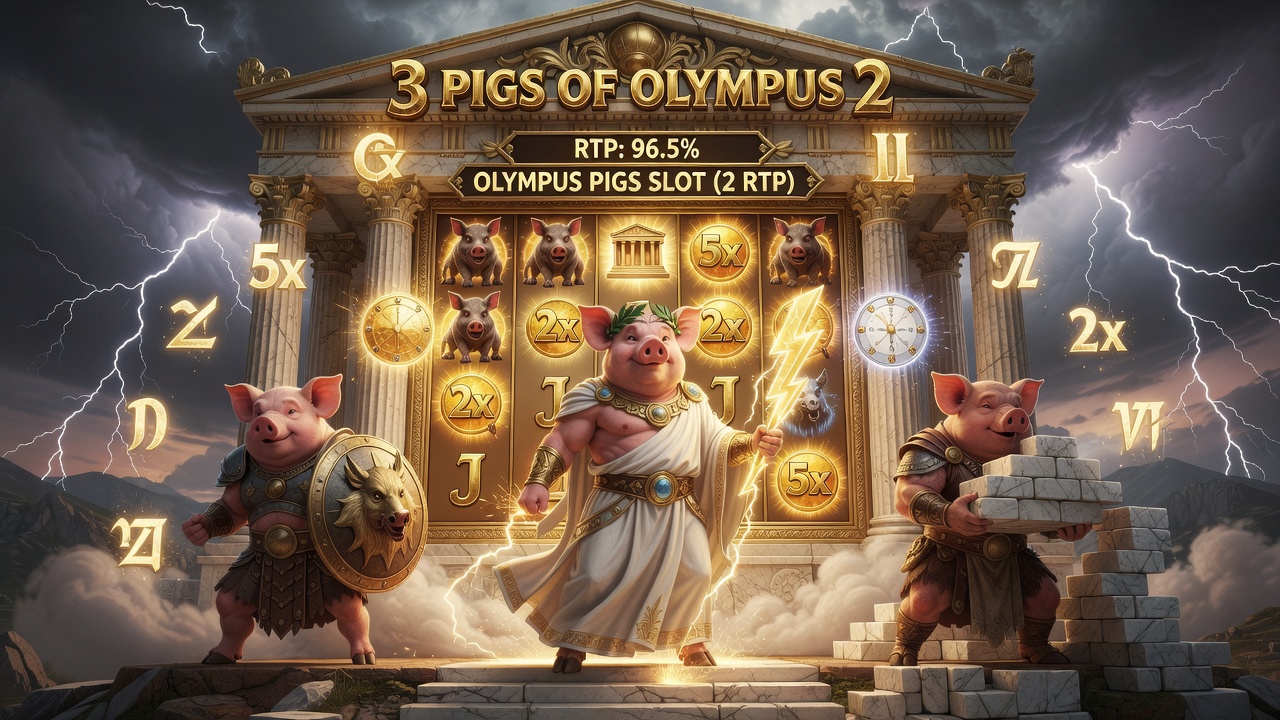
A single percentage point of RTP can shift long-term returns by hundreds of units over thousands of spins. That's not a marketing footnote - it's arithmetic, and it's the reason serious players check payout figures before they check bonus features. When a title carries the name "3 Pigs of Olympus 2," curiosity naturally turns to numbers: what does the theoretical return-to-player rate actually say about this game, and does it hold up under real play?
This piece breaks down the mechanics behind the 3 Pigs of Olympus 2 RTP figure, explains how it compares with typical slot benchmarks, and clarifies what that number can and cannot predict about your own sessions. Anyone weighing whether to spend time on the 3 pigs of olympus 2 rtp figures published by developers will find a grounded, no-nonsense explanation here rather than vague reassurances. The goal is to separate what the math tells you from what marketing copy implies.
Expect a practical look at volatility, session length, and how the theoretical RTP interacts with real bankroll outcomes - the kind of information that actually helps you decide how to approach the game.
Return-to-player is a theoretical average calculated over an enormous number of spins - typically millions, run through simulation rather than observed in a single session. It tells you what percentage of wagered money the game returns over that long run, not what happens in the next hour of play. A 96% RTP means that, statistically, the game returns 96 units for every 100 wagered across its full lifecycle, with the remaining 4% representing the house's structural edge.
Short sessions deviate wildly from the theoretical average. You can lose steadily for hundreds of spins on a 97% RTP game or hit a payout streak on a 92% title. The percentage describes the shape of outcomes across a vast sample, not the outcome of any individual sitting. Confusing the two is the most common mistake players make when reading payout tables.
Studios run extensive simulations during development, then lock the RTP into the game's math model before release. Regulatory bodies in licensed markets typically require this figure to be tested and, in many cases, displayed within the game's information panel. Some titles ship with multiple RTP configurations, letting operators select a variant - which is why the same game name can carry slightly different published figures depending on where you play.
The 3 pigs of olympus 2 game blends a mythological aesthetic with a familiar fairy-tale premise, layering classic slot mechanics - reels, paylines, and symbol combinations - over an Olympus-themed visual set. The sequel positions itself as a refinement of the original mechanics rather than a full reinvention, which matters when comparing payout behavior between the two versions.
Payout structure in this type of game usually hinges on a mix of standard symbols, a wild that substitutes across most positions, and scatter-triggered bonus rounds. Free spin rounds, multipliers, and occasional bonus buy options are the typical levers that shape how volatile the payout curve feels in practice.
A game's feature set doesn't just add entertainment value - it directly shapes how the RTP is distributed across outcomes. A title that concentrates much of its return into rare bonus triggers will feel drier during base play but deliver larger spikes when features land. Understanding this distribution matters more than the headline RTP number alone.
The 3 Pigs of Olympus RTP sits within the range typical of modern online slots, generally clustering in the mid-90s percentage bracket depending on the specific configuration an operator has enabled. This places it in line with industry norms rather than at either extreme of generous or stingy payout design.
Because some studios release adjustable RTP builds, the Olympus pigs slot RTP quoted on one platform may differ by a percentage point or two from another. This isn't a flaw - it's a deliberate distribution model that lets operators offer slightly different risk profiles under the same game title.
Set against the broader market, the pigs of olympus 2 RTP percentage doesn't stand out as unusually high or low. Most licensed online slots hover between 94% and 97%, and this title fits comfortably inside that band, making it a reasonably standard choice rather than a statistical outlier in either direction.
Volatility describes how payouts are distributed, not their total size. Low volatility games pay smaller amounts frequently; high volatility games pay rarely but can deliver substantial wins when they do. Two games can share an identical RTP while feeling completely different to play.
Games built around Greek mythology themes with layered bonus structures often lean toward medium-to-high volatility, rewarding patience through free spin rounds rather than constant small wins. This design choice affects bankroll planning far more than the RTP figure alone.
A player chasing quick, frequent wins should weigh volatility as heavily as RTP. A high RTP paired with high volatility can still produce long dry stretches - knowing this in advance prevents unrealistic expectations about how the payout percentage will show up in practice.
Given the RTP and volatility profile discussed above, budgeting for extended play without expecting linear returns is the sensible approach. Treat any single session as one small sample from a much larger statistical population.
Bet sizing interacts directly with variance exposure. Smaller, more frequent bets smooth out volatility's impact on a bankroll, while larger bets amplify both potential gains and losses without changing the underlying RTP.
Only rely on RTP data sourced from licensed operators or the game developer directly. Figures floating around unofficial forums or unverified sites can be outdated or simply incorrect, and confirming the number through a legitimate source protects against misleading expectations.
Not necessarily. Some developers release adjustable RTP builds, and individual operators can select which configuration to run. Always check the in-game information panel to confirm the exact figure being used on the platform you're playing.
No. RTP reflects the theoretical return over millions of spins, not the frequency of wins in a short session. A high RTP combined with high volatility can still produce long stretches without a payout.
Titles built around bonus-heavy mechanics, like layered free spin rounds, tend toward medium-to-high volatility. That means smaller, less frequent base-game wins offset by the potential for larger payouts during triggered features.
Check the game's built-in information or paytable screen, usually accessible through a menu icon during play. Licensed operators are generally required to display accurate, tested RTP figures for each title they offer.
RTP is one factor among several. Volatility, bonus frequency, and your own bankroll strategy matter just as much when deciding whether a title suits your playing style.
Yes, a mid-90s percentage sits within the typical range for online slots and is generally regarded as standard rather than exceptional in either direction. It places the game competitively alongside most other titles in its category.